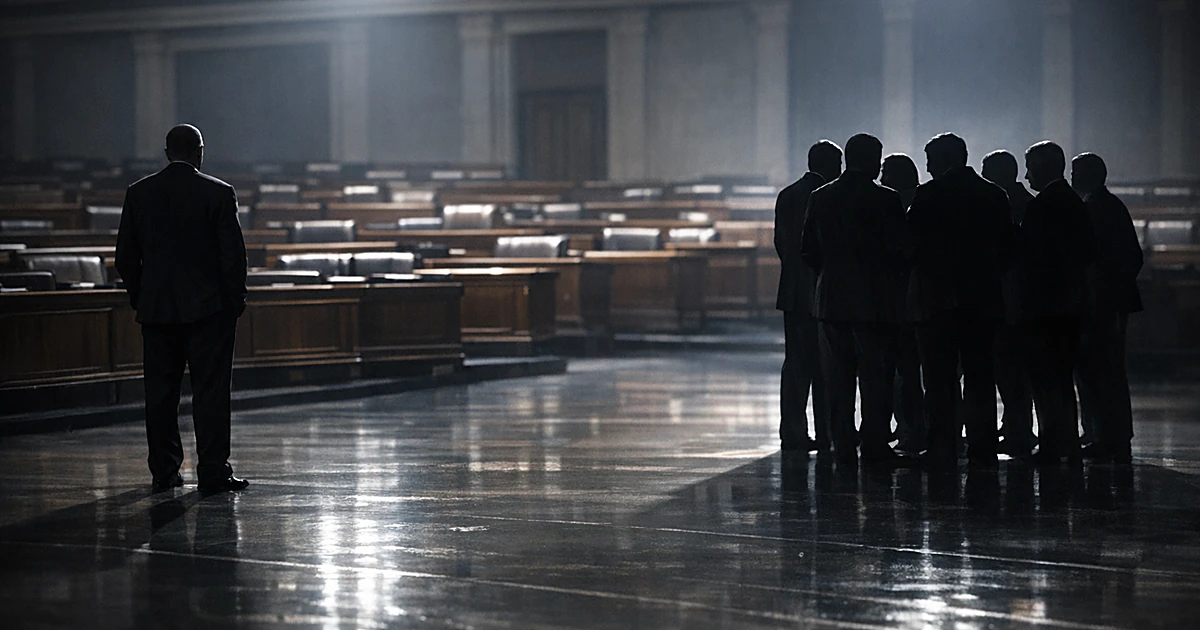
Senate Democrats block DHS funding as agency shutdown enters fourth week
Senate Democrats killed a Republican-backed bill to fund the Department of Homeland Security through the end of fiscal 2026, pushing the agency's shutdown into a fourth week with no resolution in sight, Newsmax reported.
The Senate voted 51-45 on the measure Thursday, falling short of the 60 votes required to advance. Every Democrat opposed the bill except Sen. John Fetterman of Pennsylvania.
One senator. That's the sum total of Democratic cooperation on funding the agency responsible for border security, immigration enforcement, and counterterrorism. While DHS operates in a state of limbo, Senate Democrats have decided that now is the time to play hardball over "reforms" that amount to hamstringing the agency's enforcement mission.
The Democratic Argument Collapses on Contact
Sen. Tim Kaine of Virginia laid out the Democratic position this week with striking candor:
"They [DHS] have plenty of money. So we're not going to suddenly say, 'Oh, well, let's give up our request for necessary reforms.'"
Read that again. Democrats are simultaneously arguing that DHS has "plenty of money" and that they're withholding funding to extract concessions. If the agency has plenty of money, why does the shutdown matter? And if the shutdown matters, why block the funding?
The answer is obvious: the shutdown is leverage, not a concern. Democrats aren't worried about DHS operations grinding to a halt. They're counting on it. The pain is the point, because the pain creates pressure, and the pressure is supposed to force Republicans into accepting conditions that would weaken immigration enforcement from the inside.
Senate Minority Leader Chuck Schumer claimed Republicans could quickly resolve the impasse by agreeing to proposed reforms. Senate Majority Leader John Thune accused Democrats of refusing to negotiate in good faith. Based on the vote tally, Thune has the stronger case. A 51-45 vote means a bipartisan majority supported funding DHS. The minority blocked it anyway.
The Fetterman Exception
John Fetterman's vote deserves a brief note, not because it changes the outcome, but because it highlights how far his own party has drifted. Fetterman has carved out an increasingly independent lane on immigration and national security issues, breaking with Democratic leadership on votes that most of his colleagues treat as party-line obligations. When the lone Democratic defector on DHS funding is a senator from Pennsylvania who won his seat in 2022 as a progressive champion, something has shifted in the party's internal dynamics.
Whether Fetterman represents the future of the Democratic Party or just an anomaly remains to be seen. But his willingness to vote for DHS funding while 44 of his colleagues voted against it tells you everything about where the party's center of gravity actually sits on border security.
A Leadership Shakeup at DHS
The funding fight comes as President Trump announced Thursday that he intends to replace DHS Secretary Kristi Noem with Sen. Markwayne Mullin of Oklahoma. The leadership transition arrives during a turbulent period for the department, which has weathered months of controversy surrounding ICE enforcement operations, including raids and protests in Minnesota.
Democrats have pointed to DHS having already received significant resources in a recent spending package as justification for their blockade. But receiving resources in a prior package and being fully funded through fiscal 2026 are not the same thing. Agencies don't run on leftover appropriations. They run on authorization, continuity, and the certainty that allows long-term planning. A shutdown disrupts all three.
What Democrats are really after
Strip away the procedural language and the talk of "reforms," and the Democratic strategy reveals itself plainly. They want conditions attached to DHS funding that would constrain how the agency enforces immigration law. They want to use the appropriations process to impose policy changes they cannot pass through normal legislation. And they want to do it while a new DHS secretary is being installed, maximizing institutional disruption.
This isn't about fiscal responsibility. No one blocking government funding gets to claim the mantle of responsible governance. This is about making immigration enforcement as difficult, as contested, and as legally entangled as possible.
The 60-Vote Problem
The structural reality is blunt. Republicans hold the Senate majority but cannot clear the 60-vote filibuster threshold without Democratic cooperation. That gives the minority veto power over must-pass legislation, and Democrats are exercising it without hesitation. A bipartisan majority of senators voted to fund DHS. The bill failed anyway. That's not democracy in action. That's the filibuster weaponized against basic government function.
Conservatives have debated filibuster reform for years, usually with caution. Moments like this test that caution. When 51 senators vote to fund the department protecting the homeland and 45 senators can stop them, the institution is working against the country's interests.
Four Weeks and Counting
The DHS shutdown is now entering its fourth week. The men and women who patrol the border, investigate human trafficking, screen travelers at airports, and respond to natural disasters are operating under the cloud of political gamesmanship. Democrats say the agency has "plenty of money." The agency's employees, working without the stability of a funded budget, might disagree.
Republicans put a clean funding bill on the floor. A majority voted yes. Democrats said no. That's the story, no matter how many times Schumer says the resolution is simple. It is simple. Fund the department. The people blocking it own what comes next.