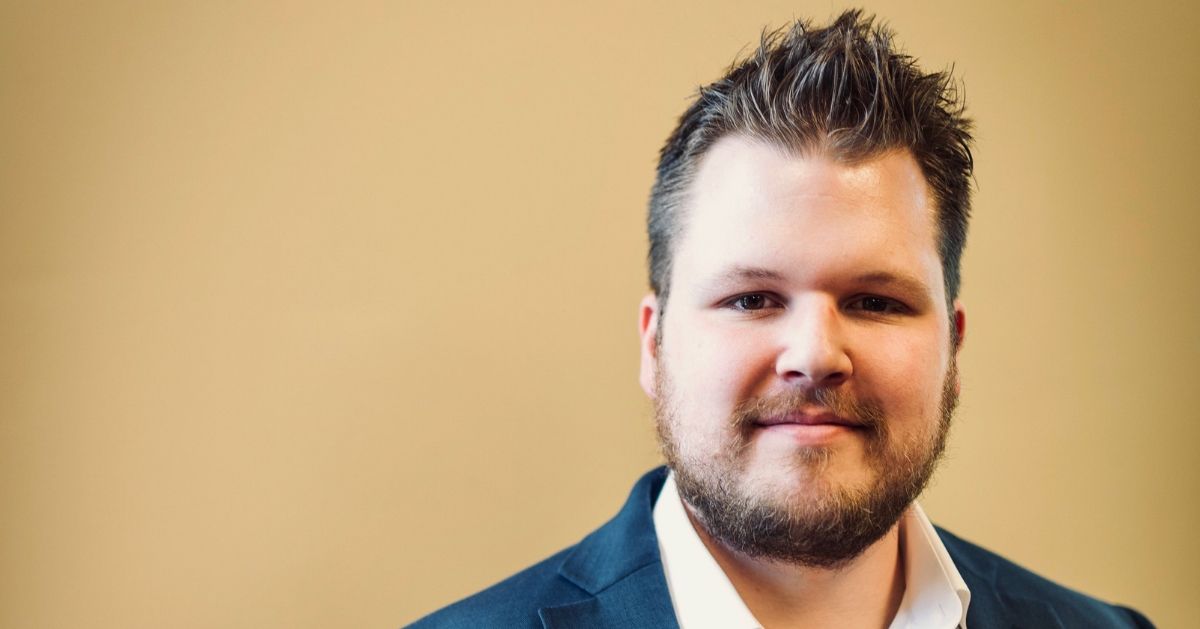
Rep. Kevin Kiley files to leave Republican Party, will serve as House's sole independent
Rep. Kevin Kiley of California announced Monday that he will formally abandon the Republican Party this week, filing a letter with the House clerk to drop his GOP identification for the remainder of the current Congress. He will become the sole independent member of the House of Representatives.
The move, announced during a virtual press conference, comes as Speaker Mike Johnson already navigates a paper-thin majority. Kiley said he spoke with Johnson "briefly" over the weekend to discuss the administrative part of his switch, but did not consult leaders in either party before making his decision.
A Party Switch That Isn't Quite a Switch
Kiley insists he will continue, "as an administrative matter," to caucus with the Republicans. He also said he won't change his approach to legislation by joining Democrats to oppose rules that could prevent GOP priorities from hitting the floor, The Hill reported. In other words, he wants the freedom of independence without the consequences of defection. That framing deserves scrutiny.
Kiley had previously announced he would run for reelection in the midterms as an independent. He currently represents California's 3rd District but is jumping into the newly drawn 6th District, which is currently held by Rep. Ami Bera (D-Calif.). Bera is also switching districts under the new map, seeking reelection in the 3rd District. The musical chairs are courtesy of new congressional lines approved by a special ballot initiative championed by Gov. Gavin Newsom.
When pressed on whether he might caucus with Democrats in the next Congress if he wins that race, Kiley left the door open: "That's a decision I'll make at the time."
Not exactly a ringing commitment to the coalition he claims he'll still support.
The Gerrymandering Justification
Kiley framed his departure as a principled stand against partisan mapmaking. He cited his disgust with the gerrymandering battles raging around the country as the catalyst:
"I reached the decision that, since gerrymandering seeks to elevate partisanship above everything else in our politics and governance — seeks to make it the sum and substance of our politics — then the best way to counter gerrymandering and its insidious impacts on democracy is simply to take partisanship out of the equation."
It's a tidy philosophy. It's also conveniently timed for a Republican running in a newly redrawn district that Democrats expect to favor them. California's new map could net Democrats as many as five additional seats in the next Congress. Kiley isn't just objecting to gerrymandering on principle. He's staring at a district that was drawn to make his Republican label a liability.
Meanwhile, Texas state Republicans have undergone mid-decade redistricting at the request of President Trump, with lines designed to flip as many as five House seats to the GOP. The gerrymandering wars are real, and they cut in both directions. But Kiley's response to them is not to fight for better maps. It's to shed the jersey entirely.
What "Independent" Actually Means Here
There is a long tradition in American politics of lawmakers who call themselves independent while functionally operating as members of one party. The Senate has seen this for years. The label provides electoral cover in purple or hostile districts while the voting record tells the real story.
Kiley appears to be betting that "independent" plays better in his new California district than "Republican." That's a calculation, not a conviction. When he says his posture will be to "do whatever serves my constituents," he's adopting the blandest possible language to avoid committing to anything. Asked about voting his conscience on legislation, Kiley offered:
"I'll have to consider every one on its own merits, but I'm all for giving people the opportunity to vote their conscience."
Every politician in America claims to vote on the merits. The question is what happens when the merits conflict with the political incentives of running without a party in a blue-trending district.
The Practical Problem for the GOP
Kiley's insistence that nothing will change legislatively rings hollow when you consider the broader dynamics. He caucuses with Republicans now, sure. But a member who has publicly severed ties with the party, left open the possibility of caucusing with Democrats next term, and built his brand around rejecting partisanship is not someone leadership can count on when the votes are tight.
And the votes are always tight in this House.
Johnson doesn't need philosophical independents. He needs reliable votes. Every member who peels away from the conference, even nominally, compounds the math problem that has defined this Congress from its first day. Kiley may still vote with Republicans on most bills. But "most" is a luxury the Speaker can't afford.
The Bigger Picture
Kiley's move reflects something real about the pressure Republican members face in California, where the political terrain keeps shifting leftward by design. Newsom's ballot initiative didn't just redraw lines. It restructured the battlefield. Republicans who could win in their old districts now find themselves competing on maps drawn by their opponents.
The honest response to that is to fight the maps, rally the base, and make the case for conservative governance in hostile territory. The less honest response is to strip off your party affiliation, call it principle, and hope the new label buys you enough crossover appeal to survive.
Kiley chose the latter. He may win his race. He may even continue voting with Republicans most of the time. But the message he sent Monday is unmistakable: when the map got harder, the R got dropped.
That's not independence. That's arithmetic.