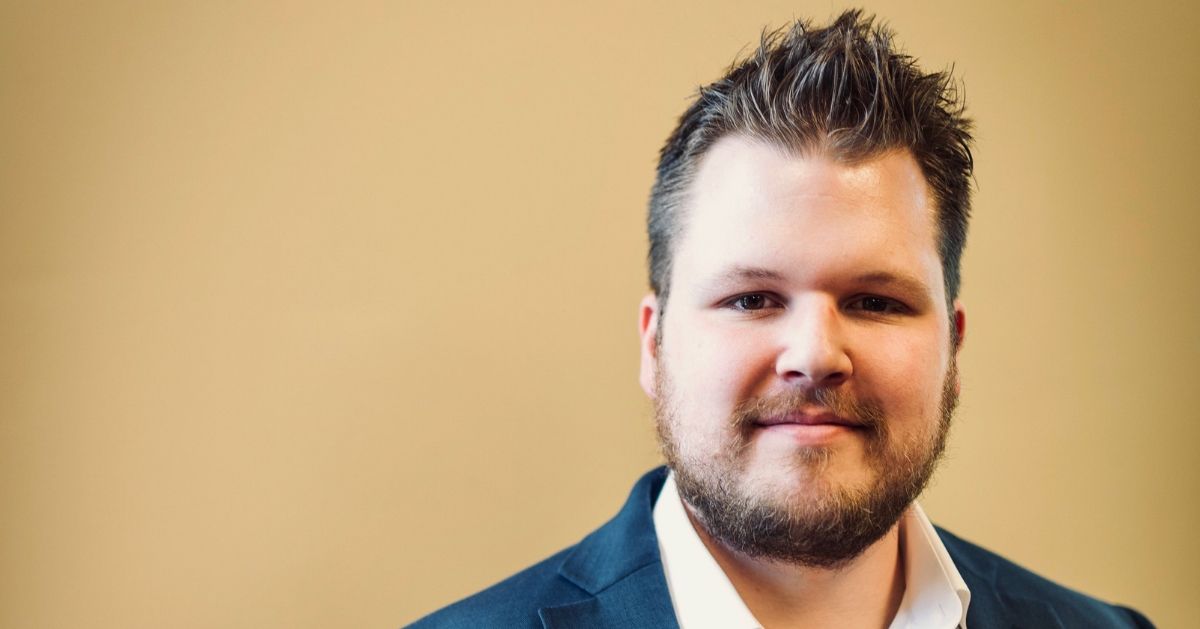
Dan Crenshaw blames 'misinformation' for his 15-point primary loss in Texas
Outgoing Texas Rep. Dan Crenshaw went on CBS News's "Face the Nation" Sunday to explain his stunning 15-point loss in the March 3 GOP primary, and his answer boiled down to one word: misinformation.
According to The Daily Caller, the four-term congressman told host Margaret Brennan that his defeat at the hands of Republican state Rep. Steve Toth was "basically a product" of online smears and conspiracies.
Not a policy disconnect. Not a failure to read his district. Not the fact that he was the only one of 19 incumbent House Republicans representing Texas whom President Trump did not endorse prior to the primary.
Just misinformation.
The Crenshaw Explanation
Crenshaw framed himself as uniquely victimized. "I'm a unique Republican," he told Brennan, before laying out his theory of the case:
"You know, first of all, you have about 20% of Republican voters bothering to even vote at a primary, and then you have dozens of online smears and conspiracies that people were going into the voting booth actually believing, I mean, believing that I was worth millions of dollars from insider trading."
He insisted the claims had been debunked repeatedly, but that none of it mattered. Voters believed what they believed. He then pivoted to blaming Democrats, claiming they spent "almost a million dollars" pushing smears on television.
"So Republican voters are going to the voting booth believing what a Democrat told them on TV based on a smear headline written by a liberal reporter in D.C."
Brennan pressed him on what lessons other Republicans should draw from his loss. His answer was less a lesson than a lecture directed at the voters who fired him: "Are you going to believe everything you read online or that's sent to you in your mail?"
What Crenshaw Leaves Out
The misinformation narrative is convenient because it lets Crenshaw avoid confronting the substance of why his own voters turned on him. His district voted for President Trump by 23 points in the 2024 election. Polling and betting markets had Crenshaw as the overwhelming favorite heading into election night. And he still lost by 15 points.
That kind of collapse doesn't happen because of a few viral posts.
Steve Toth carried the endorsement of Sen. Ted Cruz during the primary season. In an October 2025 interview with Tucker Carlson that amassed over 700,000 views on YouTube, Toth and Carlson accused Crenshaw of failing to represent the America First movement, being too lax on illegal immigration, and holding a stance on Russia's aggression in Ukraine that was out of step with the base. Carlson also pointed to what he called Crenshaw's "suspicious skills in the stock market."
These weren't shadowy, anonymous attacks. They were public criticisms from named figures with large audiences, raising questions that Republican primary voters clearly found persuasive.
The Temperament Problem
There's also the matter Crenshaw would probably prefer to forget. In February 2025, he was caught on video saying he would "fucking kill" Carlson if he ever met him in person, adding: "No, seriously, I'll kill him. He's the worst person I've ever met."
Carlson's response, delivered eight months later, was almost surgically restrained by comparison:
"I don't think Dan Crenshaw is the worst person in the world or anything like that. I feel sorry for Dan Crenshaw, he's clearly a very troubled guy."
Whatever one thinks of the underlying policy disputes, the contrast in composure did Crenshaw no favors. A congressman and former Navy SEAL threatening violence against a media figure on camera is not the behavior of someone who has his district locked down. It's the behavior of someone who knows he's losing control of the narrative and has no idea how to get it back.
When 'Misinformation' Means 'Accountability'
There is a growing pattern among politicians who lose primaries: blame the voters. Call it misinformation. Call it low turnout. Call it outside money. Anything but the simplest explanation, which is that the people who elected you decided you no longer represented them.
Crenshaw pointed to the 20% primary turnout as if it were evidence that his loss was illegitimate. But primaries reward intensity, and intensity follows conviction. If 80% of your voters couldn't be bothered to show up and save your seat, that tells you something about how passionately they felt you deserved it.
The former congressman wants Republican voters to ask themselves whether they believe everything they read online. Fair enough. But voters are equally entitled to ask their representatives some questions of their own:
- Why were you the only Texas House Republican Trump declined to endorse?
- Why did your positions on immigration and foreign policy drift from a district that went for Trump by 23 points?
- Why was your response to criticism a caught-on-camera threat instead of a policy argument?
Crenshaw's service as a Navy SEAL commands genuine respect. His sacrifice for this country is real and should never be diminished. But military heroism is not a perpetual shield against political accountability. Voters in his district honored that service by electing him four times. They also decided, by a wide margin, that it was time for someone else.
Blaming the people who used to vote for you is not a lesson for the Republican Party. It's a concession speech dressed up as media analysis.