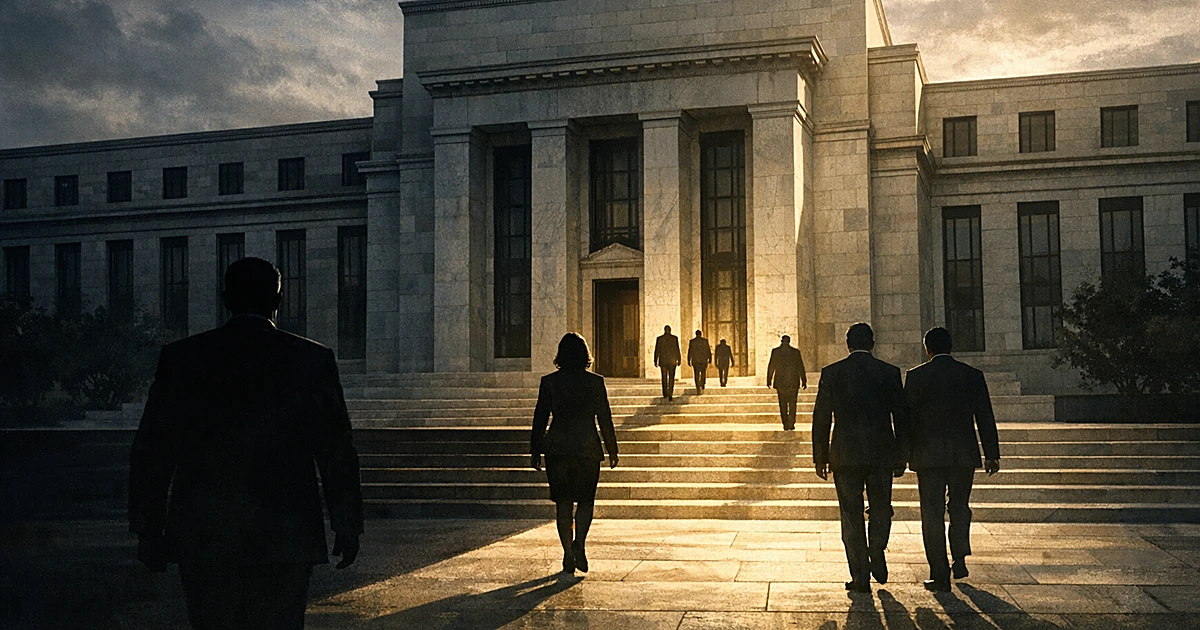
Tillis drops his hold on Kevin Warsh, clearing a path to confirm Trump's Fed chair pick
Sen. Thom Tillis ended months of suspense Sunday when he announced he would allow Kevin Warsh's nomination to lead the Federal Reserve to move forward, a reversal that hands Senate Republicans the votes they need on the Banking Committee and sets up a tight sprint to confirm a new Fed chair before Jerome Powell's term expires May 15.
Tillis, a North Carolina Republican, had been the lone GOP holdout on the committee, single-handedly stalling a nomination that unified Democrats already opposed. His shift came two days after the Department of Justice dropped its criminal investigation into Powell's management of a $2.5 billion renovation of two Fed buildings in Washington, the very probe Tillis had called a threat to the central bank's political independence.
The senator made his announcement on NBC's Meet the Press, as the New York Post reported:
"I am prepared to move on with the confirmation of Mr. Warsh. I think he's going to be a great Fed chair."
That one sentence dissolved the bottleneck. With Tillis back in the fold, Banking Committee Republicans have the majority to outvote unified Democratic opposition and send Warsh's name to the full Senate, where Republicans hold control and are expected to confirm him.
What Tillis demanded, and what he got
Tillis had drawn a hard line: no vote on Warsh until the Justice Department wrapped up its probe of Powell. He framed the issue not as a personal grudge but as a matter of institutional principle, arguing that an open DOJ investigation into a sitting Fed chair could look like political leverage over monetary policy.
As the Washington Examiner reported, Tillis said DOJ assurances cleared the way: "We have assurances from the DOJ that I needed to feel like they were not using the DOJ as a weapon to threaten the independence of the Fed."
The timeline matters. Powell disclosed back in January that the DOJ had opened a criminal investigation into the Fed renovation project. He released a video calling the probe "intimidation" and accusing the Trump administration of trying to pressure the Fed into cutting interest rates. In March, a federal judge blocked the DOJ's subpoenas, finding they had been issued for the improper purpose of pushing Powell to lower rates or resign.
U.S. Attorney Jeanine Pirro said she would appeal that ruling. As recently as last week, she publicly signaled she intended to press on. Then on Friday, Pirro reversed course, posting on X that she was ending the investigation and asking the Fed's own inspector general to take over.
That was enough for Tillis. The senator's willingness to break with the Trump administration on nominees is not new, he has clashed openly with White House officials in recent months. But this time, the administration gave him what he asked for, and he responded in kind.
The clock is running
Powell's leadership term ends May 15. With roughly three weeks left, one of which the Senate is scheduled to spend on recess, the confirmation timeline is extraordinarily tight. The Senate has only once before confirmed a Fed nominee in less than three weeks, AP News noted.
If Warsh is not confirmed before that date, Powell has said he would serve as temporary chair. Nobody in either party seems eager for that outcome.
At his confirmation hearing earlier in the week, Tillis described Warsh's credentials as "impeccable." Warsh, a former Fed governor who served from 2006 to 2011, promised to overhaul the Fed's approach to monetary policy and pledged closer cooperation with the Treasury and other parts of government on non-monetary policy matters.
He also told lawmakers that President Trump did not try to get him to promise to lower interest rates, a direct rebuttal to the charge that the White House is trying to dictate Fed policy. And he suggested that Fed policymakers may be using measures of inflation that overestimate price pressures, a claim that will draw scrutiny from both sides of the aisle.
The DOJ probe: legitimate oversight or political pressure?
The investigation into the $2.5 billion renovation project was never a simple accounting matter. Powell cast it as a weapon. The federal judge who blocked DOJ subpoenas in March agreed, at least in part, finding the subpoenas were issued for an improper purpose.
Pirro's Friday decision to hand the matter to the Fed's inspector general, who was already months into a separate review of the renovations, suggests the underlying questions about cost overruns may still get answered. What ended was the criminal investigation, not the scrutiny itself.
Tillis' concern was always about the optics and the precedent. A Justice Department investigating a Fed chair while the president openly criticizes that chair's interest-rate decisions is a bad look for central bank independence, regardless of whether the renovation spending deserved a hard look. As the Washington Times reported, Tillis said Warsh's confirmation could now "move on... on time" after the probe was dropped.
That framing served Tillis well. He got to play the role of institutional guardian, extracted a concession, and still ended up where the White House wanted him, voting yes.
Warsh's path through committee
Democrats on the Banking Committee remain unified in opposition. Just the News reported that Warsh needs committee approval and then a simple majority on the Senate floor, where Republicans hold the numbers. Tillis was the only Republican whose opposition could have bottled up the nomination at the committee stage.
The episode fits a broader pattern in the current Senate, where individual Republican senators have periodically used leverage over nominees and legislation to extract concessions from the administration. Some of those standoffs, like recent votes where Republicans split from Trump-backed priorities, have ended less neatly.
In this case, the system worked the way it is supposed to. Tillis identified a concern, stated it publicly, held his ground, and moved forward once the concern was addressed. That is how the advice-and-consent process should function, even when it creates friction within a party.
White House press officials had previously publicly criticized Tillis for blocking the Fed nomination, a rare intra-party rebuke that underscored how seriously the administration took the delay.
Meanwhile, the broader Senate has seen members from both parties cross expectations on major issues. Sen. John Fetterman, a Democrat, broke with his own party to back Trump on Iran policy, a reminder that the current political environment rewards senators who pick their moments to defy their own side.
What comes next
The Banking Committee can now schedule a vote to advance Warsh's nomination. If it clears committee, floor confirmation is expected to follow. The question is whether it can all happen before May 15.
Warsh's promise to rethink the Fed's monetary policy framework, and to work more closely with the Treasury, will face real scrutiny once he is in the chair. His claim that current inflation measures may overstate price pressures is a substantive argument that deserves debate, not dismissal. If he is right, the Fed has been running tighter policy than the economy needs. If he is wrong, loosening too fast could reignite the inflation that hammered American families over the past several years.
For now, the immediate drama is over. Tillis got his assurance. The DOJ stepped back. And the path to confirming a new Fed chair is finally open.
Washington managed, for once, to resolve a standoff without a crisis. Enjoy it. It won't last.