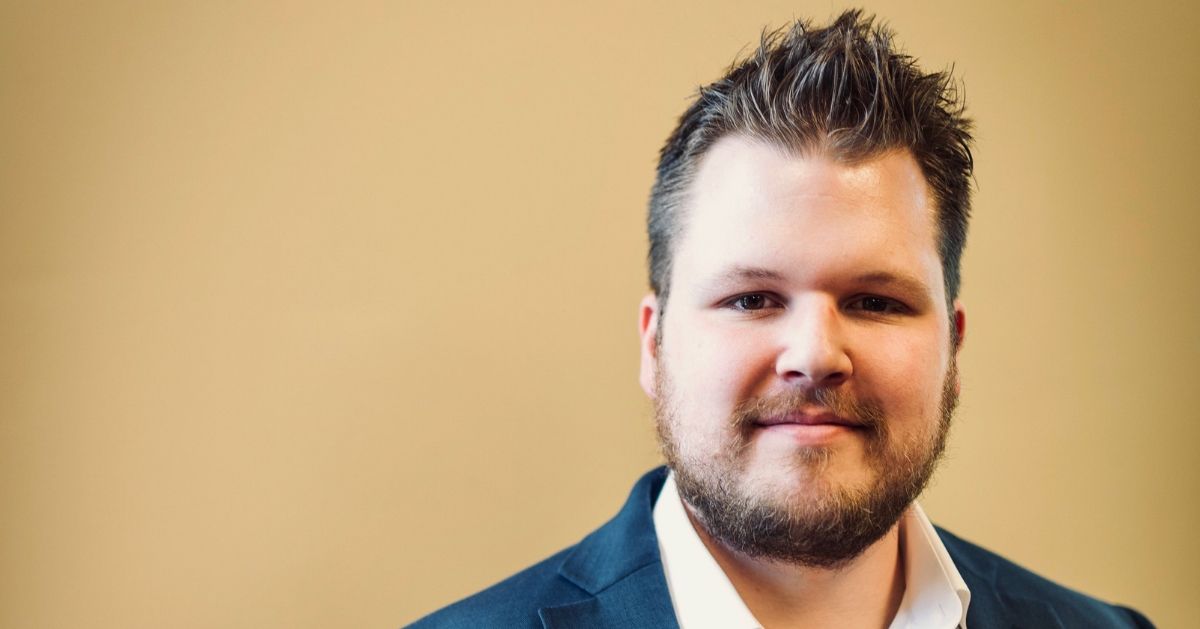
Former BLM activist Xaviaer DuRousseau details his break from the left, calls movement a 'scam'
Xaviaer DuRousseau spent his youth marching for liberal causes and backing Black Lives Matter. Now he works for PragerU and calls the entire movement a fraud, and federal prosecutors appear to be catching up to the same conclusion.
DuRousseau, a former BLM activist turned conservative content creator, sat down on "The Riley Gaines Show" to lay out the path that took him from the streets of the 2020 George Floyd protests to a full-throated rejection of the progressive politics he once championed. His account, reported by Fox News Digital, lands at a moment when the organization he left behind faces a federal fraud investigation and a 25-count indictment against one of its local chapter leaders.
The timing matters. DuRousseau is not just airing personal grievances. He is describing a pattern, indoctrination, groupthink, financial exploitation, that the justice system is now examining with subpoenas and grand juries.
The awakening that started with a Netflix casting call
DuRousseau told Riley Gaines that his shift began in an unlikely place: while being cast for Netflix's reality show "The Circle." The process pushed him to research conservative arguments he had never seriously engaged with. What he found shook the foundation of everything he had been taught.
"Socialism has literally never worked. BLM has always been a scam and the Democratic Party has always been the party of racism and violence."
That is not the language of someone who drifted quietly to the center. DuRousseau described a wholesale collapse of the worldview he had carried since childhood. He traced it back to what he called a lifetime of ideological conditioning.
"I have just been drinking the Kool-Aid because this was the indoctrination that was put upon me from the age of a little child."
The word "indoctrination" is doing real work in that sentence. DuRousseau is not blaming a single teacher or a single protest. He is pointing at a system, schools, media, cultural institutions, that he says fed him a political identity before he was old enough to question it.
What the 2020 riots revealed
The breaking point came during the summer of 2020. Protesters climbed street signs near burning barricades in Washington, D.C., on May 31 of that year. By June 13, marchers filled the streets near the Minneapolis 1st Police Precinct. Cities across the country saw looting, arson, and billions in property damage, all framed by progressive leaders and media as righteous protest.
DuRousseau watched it happen and could not square the destruction with the cause.
"I thought it was weird that so many people were demonizing every single cop, and I thought it was insane to watch the looting and the rioting happening."
That reaction, common sense rejecting the chaos playing out on live television, put him at odds with the movement he had supported. When he raised concerns, the response was not debate. It was discipline.
"Whenever I called it out, I was told that I needed to stay in line or that I was losing the plot. And I just got sick of it."
The demand for conformity is a recurring theme in accounts from people who have left progressive movements. Dissent is not tolerated. Questions are treated as betrayal. DuRousseau described the activism around him as "performative", more about signaling virtue than achieving results. The pattern mirrors broader failures in cities that stopped prosecuting crimes during the same period, where progressive ideology overrode public safety with devastating consequences.
Following the money
DuRousseau's sharpest criticism targeted the finances behind BLM. He pointed to the case of Breonna Taylor, whose death became a rallying cry and a fundraising engine for the movement. Millions of dollars poured in. DuRousseau said the money never reached the people it was supposed to help.
"[Breonna Taylor's] mother was even speaking out saying that her daughter's name and death was exploited, and there [were] millions of dollars made off of her death."
He did not stop there.
"Not a single dollar went to her, went to legal fees, or anything of that nature. So, I just started seeing the fraud pretty early on."
Those are serious allegations. And they are no longer just the claims of a disillusioned activist. In 2025, federal prosecutors launched an investigation into whether senior leaders of the Black Lives Matter organization defrauded donors of tens of millions of dollars. The investigation is ongoing.
In December 2025, the executive director of BLM OKC was indicted on 25 federal counts, including wire fraud and money laundering, after allegedly embezzling over $3 million in donations. The funds were allegedly spent on international travel, shopping, and real estate, not on the communities the donations were meant to serve. The Justice Department announced the charges publicly.
DuRousseau said he saw the fraud early. The federal government took longer to act. But the trajectory is the same: a movement that collected enormous sums in the name of racial justice while, prosecutors now allege, its leaders enriched themselves. The gap between what Democrats promised through these movements and what actually happened echoes a familiar pattern of progressive leaders failing to use the tools already available to them.
A broader pattern of breaking ranks
DuRousseau's story is not an isolated case. His willingness to publicly challenge the left's orthodoxy has made him a visible figure in conservative media. Beyond the BLM critique, he has taken on other progressive sacred cows.
When San Francisco floated a reparations plan that included $5 million payments to eligible Black residents, debt and tax relief, and homes sold for $1, DuRousseau did not hesitate. As the Washington Examiner reported, he called the proposal a fantasy designed to promote dependency.
"This is 111 ways to gaslight black Americans into thinking that we need to be dependent on a system of handouts in order to be successful," DuRousseau said.
The numbers backed up his skepticism. One estimate put the cost of San Francisco's reparations plan at roughly $50 billion, for a city with an annual budget of approximately $14 billion. As the New York Post reported, DuRousseau argued the city should focus on its homeless population and veterans sleeping on its streets rather than pursuing a financially impossible slavery-era proposal.
"It's disgusting to me that we are more focused on slavery, which ended in 1865, than we're focused on veterans who are on the streets of San Francisco, homeless and begging for spare change in 2023."
That is the kind of common-sense argument that progressive institutions struggle to answer. The math does not work. The priorities are inverted. And the people who are supposed to benefit, Black Americans living in San Francisco today, get a headline instead of a solution.
The cost of walking away
DuRousseau's account raises a question that extends well beyond one man's political journey. How many other people inside progressive movements see the same contradictions but stay silent because the social cost of speaking up is too high?
He described being told to "stay in line" when he raised doubts. That pressure, conform or be cast out, is not unique to BLM. It operates across progressive institutions, from college campuses to corporate boardrooms to the halls of Congress. Political breaks and public splits carry real consequences, as recent high-profile political realignments have shown on both sides of the aisle.
The left's response to defectors like DuRousseau is predictable. They question motives. They accuse him of selling out. They dismiss his experience as anecdotal. What they do not do is answer his specific claims about where the money went, why the riots were tolerated, or how a movement supposedly dedicated to Black lives left the families of its martyrs empty-handed.
Meanwhile, the federal investigation into BLM's finances grinds forward. The 25-count indictment in Oklahoma City is not an opinion. It is a charging document from the United States Department of Justice, alleging wire fraud and money laundering on a scale that would make any donor sick. The question is whether the Oklahoma City case is an outlier or the tip of something much larger.
DuRousseau has his answer. He gave it on the podcast, plainly and without hedging. The movement was a scam. The party that embraced it was complicit. And the indoctrination that kept people inside the fold was deliberate. The sharp divide between progressive rhetoric and actual results for communities is the same dynamic visible in Washington standoffs where Democratic obstruction leaves real workers without paychecks while leaders posture for cameras.
What the facts say
Strip away the politics for a moment and look at what is on the table. A man who was inside the movement says it was a fraud. Breonna Taylor's own mother, by DuRousseau's account, said her daughter's death was exploited for profit. Federal prosecutors have now opened an investigation into tens of millions in potentially misused donations. And a BLM chapter leader faces 25 federal counts for allegedly stealing over $3 million.
That is not a difference of opinion. That is a pattern.
DuRousseau's journey from BLM marcher to PragerU personality will be dismissed by the left as a grift. But the federal indictments suggest the real grift was happening inside the movement he left, and the people who stayed in line are the ones who got played.