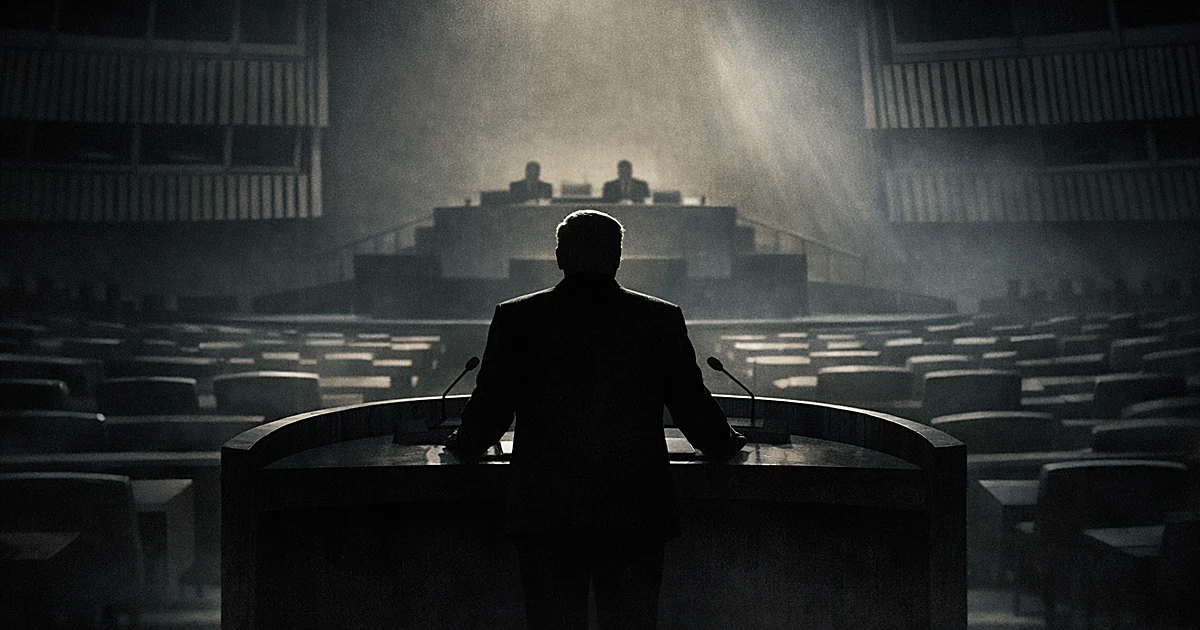
Warren stalls Senate Banking Committee vote on Trump nominees over FBI background check questions
Sen. Elizabeth Warren forced the Senate Banking Committee into two closed-door sessions and delayed votes on three Trump nominees Thursday, citing unresolved questions from FBI background checks, but Republicans still advanced two of the three to the full Senate floor.
The committee had scheduled a 10 a.m. hearing on July 23 to consider Christopher Phelan, nominated to chair the Council of Economic Advisers; John Crews, nominated to serve in the National Credit Union Administration; and Jeffrey Ledbetter, nominated to be Inspector General at the Department of Housing and Urban Development. Warren, the panel's top Democrat, upended the proceedings before they could begin. In her opening statement, she told colleagues that FBI background checks on the nominees had raised what she called "significant questions" and asked Chairman Tim Scott to move into closed session so senators could discuss the matter privately.
Scott obliged. He cleared the room of committee staffers, hearing attendees, and reporters. The first closed session lasted roughly fifteen minutes. When attendees were briefly allowed back in, senators voted 12-10 to return to closed session a second time. All eleven Democrats voted to go back behind closed doors, and one Republican, Sen. John Kennedy of Louisiana, joined them. Two other Republicans, Sens. Katie Britt of Alabama and Mike Rounds of South Dakota, did not vote, The Hill reported.
Attendees did not reenter the hearing room until just before 11:10 a.m., more than an hour after the hearing was supposed to start.
Warren demanded a delay, but Republicans pushed two nominees through anyway
Warren argued the committee should postpone the entire markup until the FBI had finished running down answers. She said the briefing she and Scott had received from the bureau left her wanting more.
"We should put off this markup until we have confidence that the FBI has run down all the answers."
She added that every senator on the panel, Democrat and Republican, deserved full information before casting a vote.
"All of our colleagues on this committee, Democrats and Republicans, have a right to be fully up to speed, fully informed on these issues before being asked to vote for or against nominees."
Warren noted she was "limited" in what she could say publicly about the background check findings. The FBI, for its part, declined to elaborate. An FBI official told The Hill that "the bureau cannot comment on external background investigations."
Republicans were unmoved, at least on two of the three nominees. After the second closed session ended, the committee voted along party lines, 13-11, to advance Phelan's nomination. It then voted 13-11 again to advance Crews. Both now head to the full Senate floor for confirmation votes.
The committee did not vote on Ledbetter. Scott's opening statement had mentioned only Phelan and Crews by name, omitting any reference to Ledbetter, a detail Warren's allies will likely seize on. Whether the omission was related to the background check concerns remains unclear. No senator publicly explained the decision to skip Ledbetter's vote.
HUD has gone without a confirmed Inspector General since Trump's second term began
Ledbetter's stalled nomination leaves a significant gap at HUD. The department has not had a Senate-confirmed Inspector General since the first week of Trump's second term. Trump nominated Ledbetter for the post in April 2026, selecting a career law enforcement official who spent more than three decades at the Army's Criminal Investigation Division and also served as a supervisory special agent in the Department of Defense's Office of Inspector General.
Trump appointed an official identified only as Harrison to serve as acting IG at HUD last August. But an acting appointment is not a permanent one, and HUD is one of 29 federal agencies currently operating without a full-time independent auditor, according to the Council of the Inspectors General on Integrity and Efficiency. That is a staggering number of watchdog vacancies across the federal government, and every unfilled post means less accountability over how agencies spend taxpayer money.
The confirmation bottleneck at the Senate Banking Committee is not an isolated problem. The Senate has been racing to confirm Trump nominees before the August recess as key posts across the executive branch sit empty. Delays, whether driven by Democratic obstruction or Republican infighting, leave agencies rudderless at a time when the administration needs confirmed officials in place to execute its agenda.
Warren's background check objections follow a familiar pattern
This is not the first time Warren has used FBI background checks to try to slow Trump nominations through the Banking Committee. Last year, she and every committee Democrat voted against advancing HUD Secretary Scott Turner's nomination, citing what they described as the administration's failure to complete his background check before the vote. Turner was ultimately confirmed anyway.
The pattern raises a fair question: Are these objections driven by genuine security concerns, or are they a procedural tool to gum up the confirmation process? Warren has not disclosed what the FBI flagged. She has not said whether the concerns relate to one nominee, two, or all three. She has offered no public evidence that any of the nominees poses an actual risk. She has said only that questions remain, and that the committee should wait.
That kind of vague, unverifiable objection is a convenient weapon for a minority party looking to slow-walk an administration's personnel. Senate Democrats cannot block nominees outright with their current numbers, but they can create delay, generate unflattering headlines, and force nominees to twist in the wind while the clock runs toward recess. The tactic has become a recurring feature of confirmation battles over Trump's picks, and not only from the left.
White House spokesperson Davis Ingle made the administration's position clear in a statement to The Hill following the hearing.
"The White House expects all of President Trump's well-qualified nominees to be swiftly confirmed."
HUD did not respond to The Hill's request for comment.
Kennedy's crossover vote adds an unexpected wrinkle
One detail from the procedural maneuvering stands out: Sen. John Kennedy voted with all eleven Democrats to return to closed session. Kennedy is a reliable conservative and not typically a senator who sides with Warren on anything. His vote suggests the FBI briefing may have contained material that gave at least one Republican pause, or, at minimum, that Kennedy believed senators deserved more time behind closed doors before proceeding.
Kennedy's reasoning has not been made public. But his crossover vote undercuts any attempt to dismiss Warren's objections as pure partisan theater. If the FBI briefing were truly routine, it is difficult to explain why a Republican would vote to extend the closed session rather than move straight to confirmation votes. The episode is a reminder that even within a GOP majority, Senate math on Trump nominees can shift on a single vote.
Still, the bottom line favors the administration. Two of three nominees advanced. The committee voted on party lines to send Phelan and Crews to the floor. Only Ledbetter's nomination remains in limbo, and with it, HUD's Inspector General vacancy.
Senate Republicans have faced internal resistance on other Trump nominees this term, and the administration has at times had to lean on its own members to clear the way. Whether Scott schedules a future vote on Ledbetter, and whether the FBI background check questions get resolved before that happens, will determine if the HUD watchdog seat stays empty into the fall.
The broader dynamic is familiar by now. Trump sends nominees to the Hill. Democrats find procedural levers to slow them down. Republicans push through what they can. And the agencies that need confirmed leadership keep waiting. At some point, the Senate will have to decide whether the confirmation process exists to vet nominees or to grind the executive branch to a halt.
Twenty-nine federal agencies without a permanent watchdog is not a talking point. It is an invitation for waste, fraud, and abuse, and every week the Senate spends on procedural gamesmanship is another week nobody is minding the store.