FBI arrests Saudi OpenAI engineer accused of planting hidden recorder in executive room
FBI agents arrested a Saudi OpenAI engineer for allegedly planting a hidden recorder in an executive conference room, a move Kash Patel ties to protecting U.S. super intelligence secrets.
Federal authorities took Abdulrahman Alfozan into custody on October 9 after the artificial-intelligence company found a covert audio device inside one of its San Francisco buildings and called in the bureau.
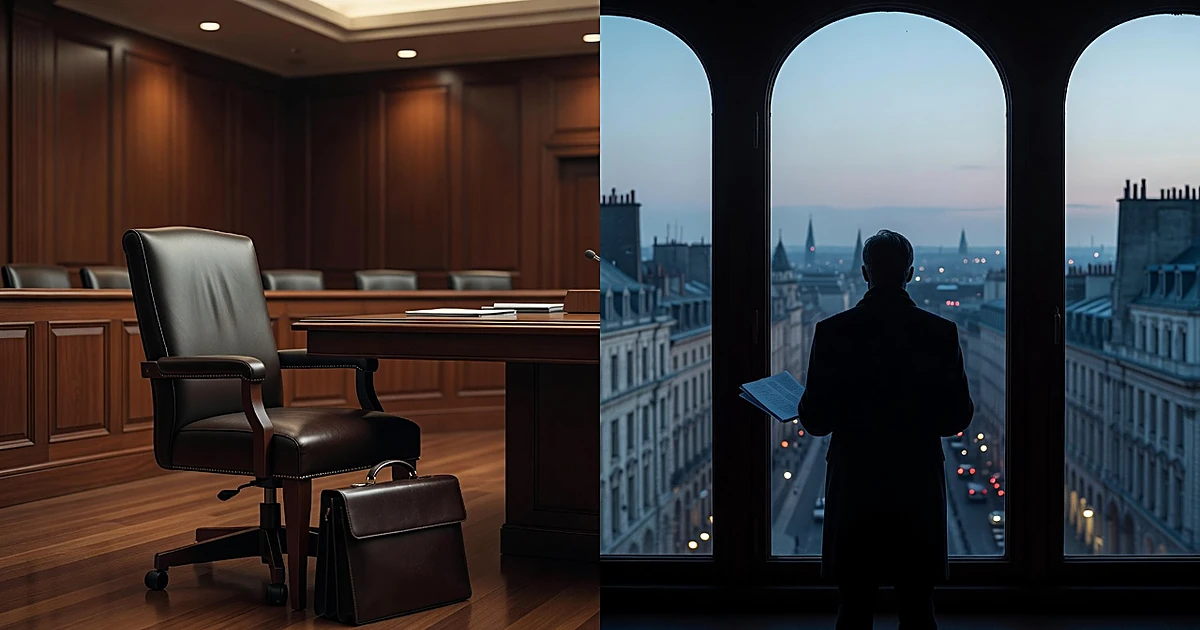
Just The News reported that OpenAI personnel discovered the gear inserted into a USB port on the back of a television in an executive conference room, concealed in toilet paper, with its contents encrypted.
Company records put the installation on or about September 28. Alfozan, a Saudi Arabian national hired as an engineer in July 2025, had no authority to enter that room or sit in on the meetings held there.
FBI Director Kash Patel announced the arrest days later and framed the case as a direct strike at efforts to siphon American breakthroughs in advanced AI.
"Abdulrahman Alfozan allegedly concealed a covert recording device inside his employer’s executive conference room to secretly capture sensitive communications about the company’s super intelligence technology,"
Patel said in the bureau’s statement. He added a second line that left little doubt about the stakes.
"Protecting American SI innovation is essential to safeguarding our nation’s economic strength and national security, and the FBI views that mission as one of our highest counterintelligence priorities."
That priority sits at the center of how Patel has described FBI work since taking the director’s chair.
OpenAI’s own cameras supplied the trail. Footage showed Alfozan near the executive conference room on multiple dates before the device turned up. Investigators later found another of his bags in a separate room. Inside sat a second recording device along with his wallet and ID.
Company cameras and a second device closed the loop
The complaint narrative is straightforward. An engineer with no business in the executive suite appears on video near the room repeatedly. A hidden recorder turns up in the USB port of the room’s television. A second unit surfaces in his belongings. OpenAI hands the matter to the FBI at once.
No public statement from Alfozan appears in the available record. The charging papers do not spell out a named statute in the reporting, yet the potential penalties are clear: if convicted he faces up to five years in prison, a $250,000 fine, and three years of supervised release.
San Francisco has become ground zero for the race to build systems that can outthink human experts. Super-intelligence research sits at the top of that ladder. Foreign access to closed-door strategy talks is exactly the kind of exposure counterintelligence teams are paid to stop.
Patel’s public emphasis on the case fits a broader pattern of the director putting national-security investigations front and center, including moments when he has faced Senate questions over how the bureau sets its own internal rules.
The timeline compresses into a few weeks. Employment begins in July 2025. The device goes in around September 28. Discovery follows. Arrest comes on October 9. The director’s announcement lands the next Tuesday.
National security, not office gossip, drove the response
OpenAI did not treat the find as a prank or an internal HR spat. The company contacted the FBI immediately. That choice tracks with how serious firms now handle anything that smells like technical collection against proprietary AI work.
American leadership in super-intelligence technology is not an abstract bragging right. It shapes economic power and military edge. A foreign national on the payroll who allegedly wires a room where executives discuss that technology creates an obvious vulnerability.
Critics of soft border and visa screening have long warned that high-skill workplaces can become collection targets. This arrest supplies a concrete example rather than a theoretical brief. The facts on the table are a hidden device, encrypted contents, CCTV proximity, and a second recorder in personal gear.
Management decisions inside the bureau continue to draw fire from several directions, including coverage of how Patel has moved to reshape the FBI legal office while under political pressure.
None of that noise changes the core allegation here. A company protecting its most sensitive conversations found physical evidence of covert recording and turned it over to federal agents. The agents made an arrest. The director called the work a top counterintelligence job.
What the record still leaves open
Several details remain outside the public complaint summary. The precise calendar date of discovery is not listed. The full text of Patel’s social-media announcement is not reproduced in the initial article. Court venue and formal charge language beyond the penalty range are not supplied.
Those gaps do not erase what is already on paper. An engineer without access privileges is captured on camera near the room. A concealed audio unit is pulled from the television. A second unit appears with his identification. The employer calls the FBI. The FBI acts.
Readers following the director’s public profile have also seen lighter coverage, from policy fights to the recent note that Patel announced his engagement while keeping the operational tempo high.
The larger point does not require extra drama. American AI labs hold technology that rivals and adversaries want. When a device shows up in the executive conference room, the proper response is the one OpenAI and the FBI delivered: investigate, arrest, and prosecute.
Taxpayers fund the FBI to stop exactly this kind of quiet collection against U.S. innovation. The case now moves into the courts, where the evidence will be tested under the same rules that apply to every defendant.
Protecting the next leap in American technology starts with keeping the rooms where it is planned free of hidden microphones.