St. Paul prosecutor declines state charges against church protest mob, drawing sharp rebuke from pastor
Dozens of protesters who stormed a Minnesota church service in January, chanting slogans, disrupting worship, and drawing federal civil rights charges, will not face any additional prosecution under state law, St. Paul City Attorney Irene Kao announced Wednesday.
The decision hands a pass, at the state level, to a group that included former CNN journalist Don Lemon and 38 others already charged by the U.S. Justice Department. It also sets up a stark split: federal prosecutors treated the January 18 incident at Cities Church in St. Paul as a civil rights violation, while the local prosecutor says the evidence falls short of Minnesota's criminal statutes.
For the families who were inside Cities Church that Sunday, and for the lead pastor who watched his congregation's worship get shut down by a mob, Kao's reasoning amounts to an open invitation for future disruptions at houses of worship across the state.
What happened at Cities Church
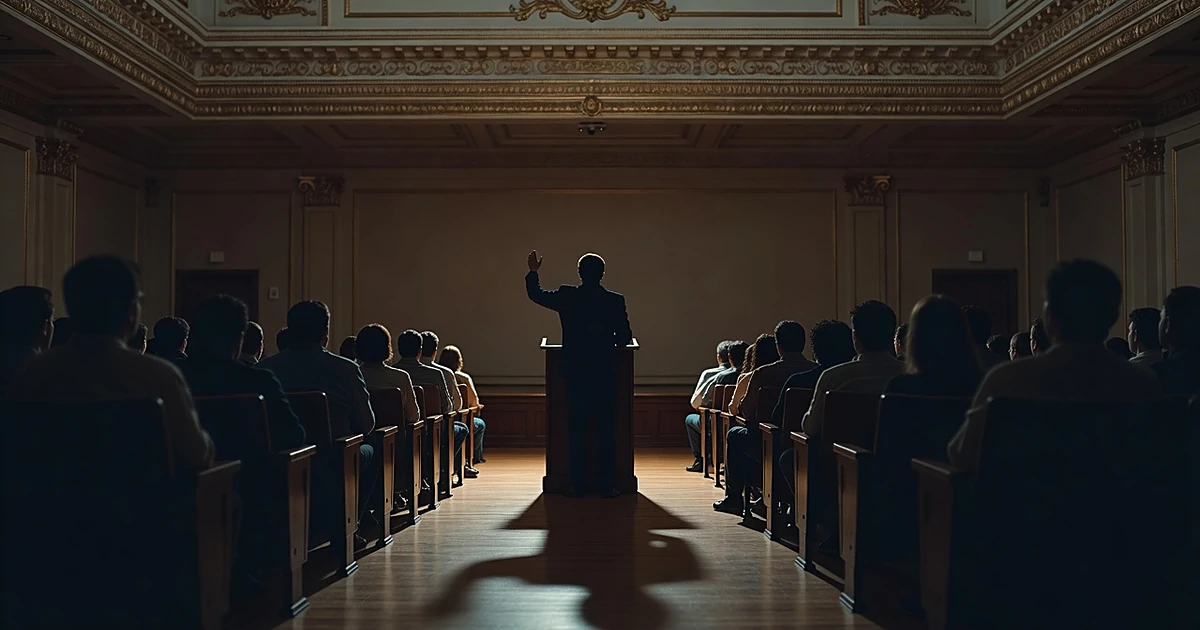
Livestreamed video from January 18 showed a group of people entering Cities Church during services and chanting "ICE out" and "Justice for Renee Good." Renee Good, a 37-year-old mother of three, had been fatally shot by a U.S. Immigration and Customs Enforcement agent in Minneapolis amid a surge in federal immigration enforcement. The protesters had learned that one of the church's pastors was also an ICE official overseeing an intensive operation in Minnesota.
The disruption was not a quiet picket on a sidewalk. It was an invasion of a worship service in progress, families, children, congregants gathered for Sunday prayer, by activists who decided their political grievance entitled them to override everyone else's religious exercise.
The U.S. Justice Department evidently agreed that a line had been crossed. Federal prosecutors brought civil rights charges against all 39 individuals. The defendants were released after their initial federal court appearances in February, as the Associated Press reported.
Kao's rationale, and what it leaves out
Kao framed her decision as a matter of evidentiary sufficiency, not sympathy. In a statement, she said:
"Current evidence is insufficient to meet that standard for criminal charges under Minnesota state statutes."
She added a caveat clearly aimed at preempting criticism:
"This decision should not be interpreted as an endorsement of unlawful behavior or public disorder."
And she attempted to thread a needle between competing constitutional rights:
"The right to peacefully protest is protected, as is the right to exercise one's religious beliefs. Balancing these equally important rights is paramount to our decision today."
The word "peacefully" does a lot of heavy lifting there. Walking into someone else's church, mid-service, and shouting political chants until worship stops is not what most Americans, or most constitutional scholars, would describe as peaceful assembly. It is targeted disruption of another group's First Amendment exercise.
Kao's framing treats the protesters' conduct and the congregants' religious liberty as two weights on a scale. But one group was exercising a right in its own space. The other group forced its way in and shut that exercise down. Those are not equivalent claims.
The pastor responds
Cities Church lead pastor Jonathan Parnell didn't hold back when speaking. In a written statement, he heavily criticized Kao's determination, calling out its logical endpoint:
"According to the St. Paul City Attorney's logic, it is perfectly fine for agitators to invade a mosque, a cathedral, or a temple, intimidate the families and children inside, and shut down their religious gathering. Just call it a 'protest.'"
Parnell's point is not hypothetical. It is the plain implication of Kao's position. If entering a house of worship during services and chanting until the congregation cannot continue does not meet the threshold for state charges, then no church, synagogue, mosque, or temple in St. Paul has any meaningful legal protection against the same treatment.
The city attorney's office may believe it struck a careful balance. What it actually did was tell every activist group in Minnesota that disrupting worship carries no state-level consequences, as long as you frame it as protest.
Federal charges remain, and a broader pattern emerges
The 39 defendants still face federal civil rights charges brought by the Justice Department. That prosecution will proceed on its own track, and the federal government clearly viewed the conduct as more than a spirited demonstration.
This is not the only case in which federal authorities have moved to hold anti-ICE protesters accountable while local jurisdictions looked the other way. A Washington jury recently convicted three protesters on federal conspiracy charges for blocking an ICE transport, a case that also tested the line between protest and criminal obstruction.
Don Lemon's presence among the charged defendants added a media dimension to the Cities Church incident. The former CNN anchor accompanied the group and was among those hit with federal charges. His involvement drew national attention but did not, apparently, change the St. Paul City Attorney's calculus.
Meanwhile, the shooting of Renee Good, the event that protesters cited as their cause, remains its own contested legal matter. Good was fatally shot by an ICE agent in Minneapolis, and the case has generated intense local debate over federal enforcement operations in the Twin Cities.
Separately, a Minnesota family faces federal charges for an alleged assault on a reporter at a different anti-ICE protest, another sign that the federal government is taking a harder line on protest-related misconduct than some local prosecutors.
Four states act where Minnesota won't
The gap between Kao's decision and the national trend is hard to miss. At least four states, Idaho, Louisiana, Oklahoma, and Kansas, adopted laws this year making it a crime to disrupt worship services. Those legislatures saw the Cities Church incident and others like it and concluded that existing law was not enough.
Minnesota has not joined them. And Kao's decision suggests the state's largest cities may not be inclined to push for such protections, either.
The pattern is familiar. Progressive prosecutors in blue cities decline to charge conduct that federal authorities and red-state legislatures treat as clearly criminal. The result is a patchwork where your legal exposure for the same act depends entirely on the political disposition of the local prosecutor.
That kind of selective enforcement corrodes public trust in the law. It tells one group of citizens, in this case, churchgoers, that their rights matter less than another group's political passions. And it tells activists that the cost of disruption, at least at the state level, is zero.
Courts across the country continue to wrestle with how to handle politically charged cases. A federal judge recently dismissed charges against two former Louisville officers in the Breonna Taylor case, and a former NYPD sergeant won bail pending appeal of a manslaughter conviction, both reminders that the justice system's treatment of high-profile cases often says more about politics than about the law itself.
The real message
Kao insists her decision is not an endorsement of disorder. But the protesters who marched into Cities Church, shouted down a congregation, and forced families with children to abandon their Sunday worship now know that the city of St. Paul will not hold them accountable.
The federal charges remain. The defendants still face a serious prosecution. But the state-level pass sends its own signal, one that every house of worship in Minnesota will have to reckon with.
Pastor Parnell asked the right question: if this is acceptable, what isn't? Kao's office did not answer. Four other states did.
When a prosecutor cannot find a way to charge people who barged into a church and shut down Sunday worship, the problem is not the evidence. It is the priorities.