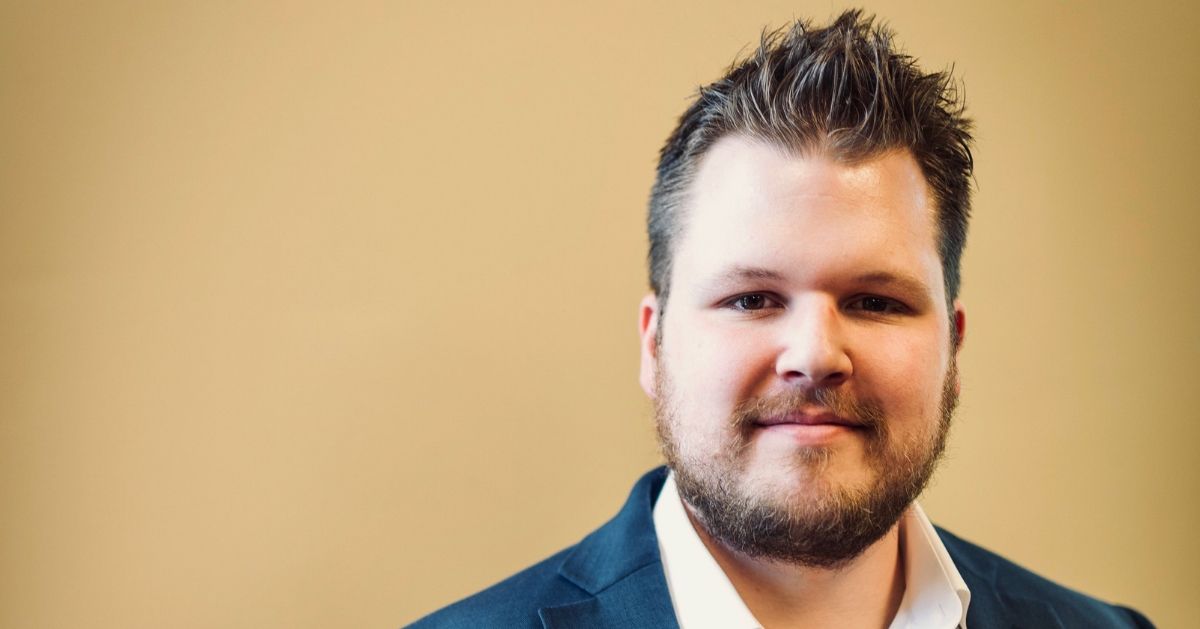
Former Coldwater, Kansas, mayor admits to illegal voting as a noncitizen
Jose "Joe" Ceballos, a Mexican-born green card holder who served two terms as mayor of Coldwater, Kansas, pleaded guilty this week to three counts of disorderly election conduct, the culmination of a prosecution by Kansas Attorney General Kris Kobach's office that laid bare how a noncitizen cast ballots in American elections and even held elected office.
The Department of Homeland Security confirmed the guilty plea and said federal authorities allege Ceballos falsely claimed U.S. citizenship on voter registration documents. He was issued a green card in 1990 but never became a citizen, a fact that did not stop him from registering, voting, and winning a mayoral seat in the small southwest Kansas town.
The case lands at a moment when the Trump administration is pressing Congress to tighten election security and expand tools that help states verify voter eligibility. Officials from DHS and U.S. Citizenship and Immigration Services seized on the Ceballos plea as proof that noncitizen voting is not a myth, and that the federal government's verification systems are finally catching up to a problem that went unaddressed for years.
Six felony counts, three elections, one green card
When Kobach announced the original charges last November, he described Ceballos as "recently reelected" in Coldwater. The initial filing included six felony counts: three for voting without being qualified and three for election perjury. Authorities allege Ceballos voted in the November 2022, November 2023, and August 2024 elections.
Kobach was blunt at the time. "In Kansas, it is against the law to vote if you are not a U.S. citizen. We allege that Mr. Ceballos did it multiple times," the attorney general said.
The guilty plea entered this week covered three counts of disorderly election conduct. The Step 1 reporting does not specify whether the remaining counts were dropped as part of a plea arrangement, and no sentence or penalty has been disclosed. What is clear is that Ceballos admitted in open court to conduct that federal and state officials describe as a direct assault on election integrity.
Ceballos also carries a prior battery conviction from 1995, Fox News Digital reported.
A citizenship application that made things worse
In February, Ceballos applied for U.S. citizenship. On that application, federal authorities allege, he falsely claimed he had never previously represented himself as a U.S. citizen. That claim contradicted the voter registration forms on which he had done exactly that.
Assistant DHS Secretary Lauren Bis's office shared with Fox News Digital a facsimile of a Kansas state voter registration form showing Ceballos had falsely claimed to be a citizen. The document underscores the gap between what Ceballos told Kansas election officials and what he told federal immigration authorities, two stories that could not both be true.
The broader pattern is hard to miss. A man who was not a U.S. citizen registered to vote, cast ballots in at least three elections, won a mayoral race, served two terms, and then, when he finally sought actual citizenship, allegedly lied again about his history. Every layer of the system that should have caught this failed until state and federal authorities finally intervened. As our previous coverage of this case detailed, the legal consequences arrived only after years of unchecked illegal participation in American elections.
The SAVE program and 24,000 red flags
Federal officials used the Ceballos case to spotlight the Systematic Alien Verification for Entitlements program, known as SAVE. The database helps states determine who is in the country legally and, critically, who is and is not eligible to vote.
Since April 2025, DHS says more than 24,000 cases have been identified through the SAVE system as potential noncitizens on voter rolls across the country. That number alone should give pause to anyone who dismisses noncitizen voting as a negligible problem.
Bis credited the program for helping bring Ceballos to justice and called on Congress to pass the SAVE America Act, which she described as follows:
"Commonsense legislation that requires voters to present photo ID and implements other critical measures to protect federal elections from fraud."
She added a broader point about the administration's posture on election security:
"President Trump has been unequivocal: Nothing is more fundamental than the integrity and security of our elections."
Bis also stated plainly: "Our elections belong to American citizens, not foreign citizens." That sentence should not be controversial. The fact that it needs to be said at all tells you something about the state of the debate.
USCIS and Kansas officials weigh in
USCIS spokesman Matthew Tragesser called the situation "absolutely unacceptable and sad." He tied it to a longer institutional failure, saying the outcome was no surprise "given the years of lax voting security in the United States." Tragesser added:
"From day one, the Trump administration has made strengthening the SAVE program a top priority so states can verify that only U.S. citizens are on the voter rolls."
Kansas Secretary of State Scott Schwab echoed the sentiment. "I'm grateful that President Trump implemented the SAVE program to help states and to prevent situations like this," Schwab said. For a Republican secretary of state in a red state, the case was both vindication and embarrassment, proof that the tools work, but also proof that the problem existed under everyone's nose for years.
The administration's push for expanded voter verification has not gone unchallenged. Democrats, including the Shapiro administration in Pennsylvania, have blamed alleged discrepancies in the SAVE system after illegal immigrant truckers were found to hold that state's commercial driver's licenses. Whether those complaints reflect genuine system flaws or political resistance to tighter screening remains an open question, but the Ceballos case makes it harder to argue the system is catching the wrong people.
In a political climate where green card holders have now been caught voting and holding office, the burden of proof has shifted. Those who oppose stronger verification measures need to explain what alternative they propose, and why the status quo should be acceptable.
What the case reveals, and what it doesn't
Several questions remain unanswered. Which court accepted the guilty plea? What sentence, if any, is pending? How did Ceballos pass through the voter registration process in the first place, and how did he run for mayor without anyone checking his citizenship?
Coldwater is a small town. Population estimates hover in the hundreds. In communities that size, local government runs on trust. But trust is not a substitute for verification, and the Ceballos case shows what happens when basic checks are absent.
The 24,000 potential noncitizen cases flagged by SAVE since April suggest the problem extends well beyond one Kansas town. Each flag is not a confirmed case of illegal voting, but each one represents a name on a voter roll that should not have been there. The scale of the cleanup effort alone argues for the kind of systematic screening that the SAVE America Act would mandate.
High-profile prosecutions and legal battles over election integrity have become a defining feature of the current political landscape. The Ceballos plea is not the biggest case in the country. But it may be the most revealing, because it shows how far a noncitizen can go in American public life when nobody bothers to check.
Meanwhile, federal prosecutors continue to navigate complex accountability questions across multiple fronts. The common thread is whether the institutions charged with enforcing the law are actually doing their jobs, or whether enforcement only arrives after the damage is done.
The real cost of lax enforcement
Jose Ceballos did not sneak across the border. He held a green card. He lived in his community for decades. He ran for office, won, and served. None of that changes the fact that he was not eligible to vote, was not eligible to hold the office he won, and, by his own guilty plea, broke the law repeatedly.
The people who paid the price are the lawful citizens of Coldwater, Kansas, who cast their own ballots in good faith and had their votes diluted by someone who had no legal right to participate. They deserved better from the system that was supposed to protect the ballot box.
When officials say noncitizen voting doesn't happen, cases like this one are the answer. When they say the SAVE program isn't needed, 24,000 flagged names are the answer. And when they say voter ID is unnecessary, a man who checked "citizen" on a form he had no right to sign is the answer.
Elections that can't verify who's voting aren't elections. They're suggestions.