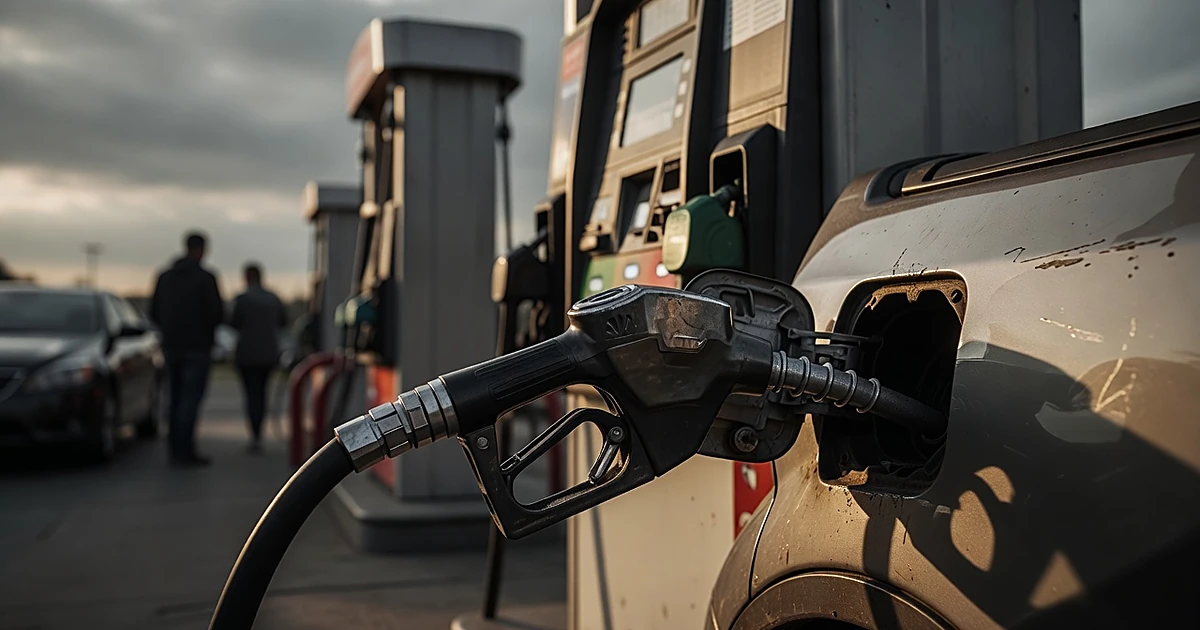
Trump weighs federal gas tax pause as governors already cut pump costs
President Trump said he is considering a suspension of the federal gas tax to ease soaring energy costs, after several states already waived their own fuel levies ahead of the midterms.
Trump told reporters at the White House on Tuesday that the idea is on the table as families face higher prices at the pump. “We’re thinking about that,” he said, tying the step to a broader push to bring energy costs down before Election Day.
The New York Post reported that any federal gas-tax suspension would require Congress to return to Washington. The House and Senate are not scheduled to come back until after the election, leaving the timing tight even as pressure builds.
The federal tax adds 18.4 cents to every gallon of gasoline and 24.4 cents per gallon of diesel. Those fixed charges sit on top of state levies that several governors have already trimmed or frozen.
Governors move first on state fuel taxes
Ohio Republican Gov. Mike DeWine signed legislation waiving the state’s 38.5-cent gas tax and 47-cent diesel tax through Dec. 31. Utah Republican Gov. Spencer Cox lowered his state’s levies by 6 cents through the end of the year.
Georgia Republican Gov. Brian Kemp suspended the state’s 33.3-cent gas tax and 37.3-cent diesel tax through at least Oct. 29. Indiana Republican Gov. Mike Braun suspended a 7% gasoline use tax and a 37-cent excise tax, saving drivers roughly 59 to 61 cents per gallon, while leaving a 63-cent diesel tax in place and expanding access to “red dye” diesel.
Kentucky Democratic Gov. Andy Beshear paused automatic inflation adjustments to fuel taxes. Both Republican- and Democratic-led states have passed temporary waivers or eased limits on red-dye and ethanol-blend fuels as prices climbed.
Those state steps came as Trump has also weighed other diesel-market options to ease the squeeze on truckers and farmers facing record fuel bills.
Pump prices nearly double year-ago levels
AAA data put the average cost of diesel at $6.32 per gallon, down from an all-time high of $6.53 on Sept. 22, but still nearly double the $3.68 paid one year ago. Gasoline was averaging $4.37 per gallon, up from $3.13 last year.
The Washington Examiner noted gas prices have risen nearly 50% since the war in Iran started in late February, with a national average near $4.50 per gallon as of Tuesday. Large jumps followed the Iran conflict and Ukrainian attacks on Russian refineries.
Energy Secretary Chris Wright underscored the administration’s stance on Meet the Press, saying officials are open to every practical tool. “All measures that can be taken to lower the price at the pump and lower the prices for Americans, this administration is in support of,” Wright said. “We are open to all ideas.”
"All measures that can be taken to lower the price at the pump and lower the prices for Americans, this administration is in support of."
Breitbart reported Wright linked the surge to Iran’s blockade of the Strait of Hormuz after U.S.-Israeli strikes, and pointed to earlier steps such as strategic petroleum reserve releases and summer-blend rule changes already underway.
The same price shock has shaped other foreign-policy timing debates, including when Trump signaled possible further pressure on Iran after the midterms.
Red-dye diesel order and G-7 reserve release
On Monday, Trump signed an executive order allowing truckers to buy tax-free “red dye” diesel through Dec. 31. That fuel is normally reserved for tractors and construction equipment; the order lets it be used more broadly to ease commercial costs.
On Friday, G-7 nations, the United Kingdom, France, Germany, Italy, Canada, and Japan, agreed to release 100 million barrels of oil and diesel from strategic reserves to tamp down prices. The coordinated release sits alongside the domestic tax and regulatory moves.
Trump has framed the entire package as part of an effort to reverse energy-cost spikes that have fed inflation in the run-up to the election. Four states acted on gas taxes ahead of the midterms, putting pressure on Washington to match the relief.
Campaign stops have kept the cost-of-living theme front and center, including when Trump vowed a big midterm showing in Ohio and tied pocketbook issues to the ballot.
Congress holds the key on a federal pause
Even with White House interest and state action already on the books, a federal gas-tax suspension cannot move until lawmakers return. The calendar leaves little room before voters head to the polls, and the cents-per-gallon math is straightforward: 18.4 cents on gasoline and 24.4 cents on diesel add up fast for households and freight haulers.
State waivers show what temporary relief looks like in practice. Ohio’s full waiver through year-end, Georgia’s suspension into late October, Indiana’s nearly 60-cent gasoline savings, and Utah’s 6-cent cut all landed without waiting on Capitol Hill.
Wright’s public backing and Trump’s own “we’re thinking about that” comment put the federal option in clear view. The remaining obstacle is legislative scheduling, not a shortage of governors willing to cut the tax burden at the pump.
Drivers paying nearly double last year’s diesel price, and gasoline well above $4, do not need another study. They need the relief already proven in the states, and a Congress willing to match it.